
Establishing cooperation with three law faculties
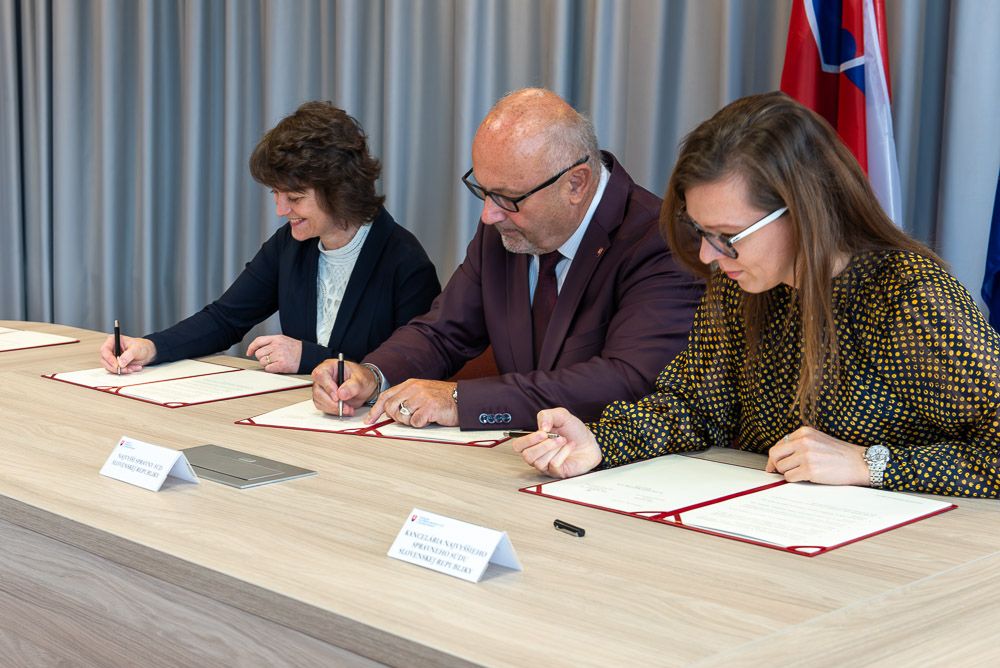
Signing of a memorandum with the Dean of the Faculty of Law of the Pan-European University in Bratislava. Photo © Supreme Administrative Court of the Slovak Republic.
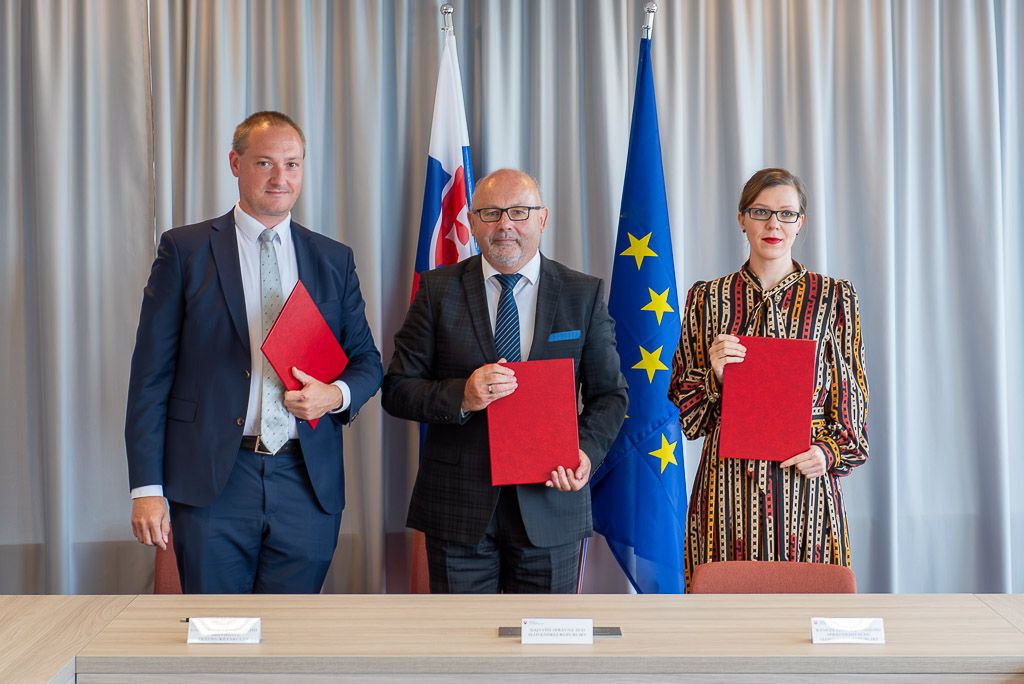
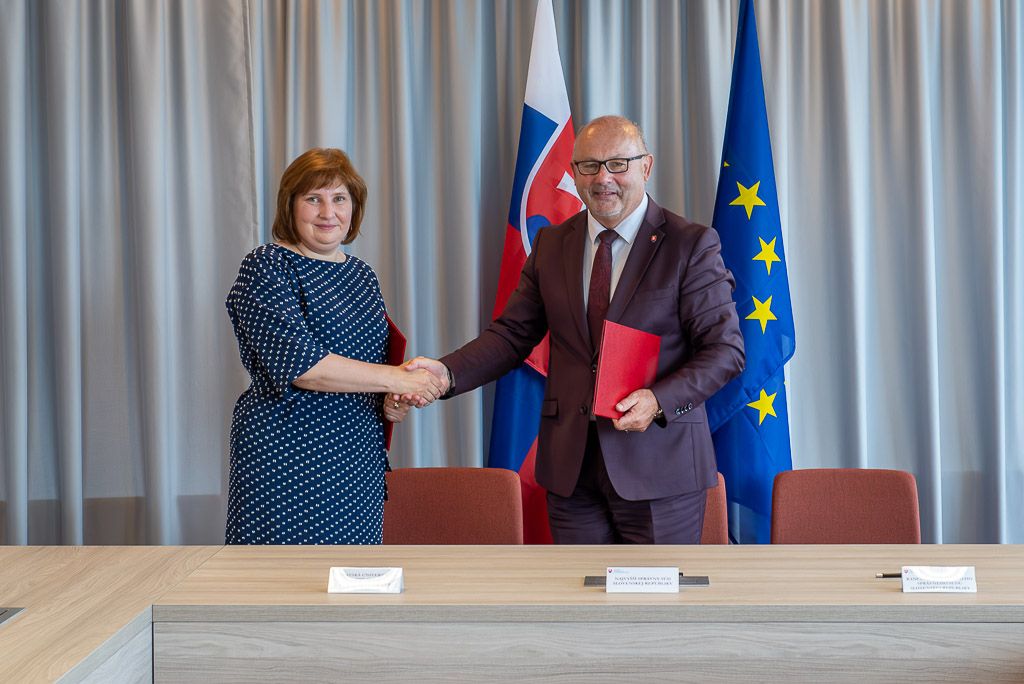
The President of the Court Pavol Naď and the Head of the Chancellery Zuzana Kyjac signed a Memorandum of Cooperation with the Dean of the Faculty of Law of the Comenius University in Bratislava Eduard Burda, the Dean of the Faculty of Law of the Pan-European University in Bratislava Katarína Šmigová and the Dean of the Faculty of Law of the University of Trnava Andrea Olšovská.
On the basis of the signed memoranda, the Chancellery will provide students (including PhD students) with the opportunity to undergo a free internship at the Analytical Department. The interns will participate in particular in the preparation of research and legal analyses for judges, in the completion of questionnaires for European or international organisations, and in case-law and legislative surveys.
In connection with the implementation of internships, the Chancellery has created appropriate material and technical conditions (laptops with access to legal information systems, the possibility of becoming a user of the library, etc.). As a rule, the duration of the internship is one semester (or three months), with a minimum of ten hours per week.
“All three law schools have produced generations of lawyers during their existence, including many experts in the field of administrative law. Since the establishment of the Supreme Administrative Court of the Slovak Republic, we have been actively looking for ways to connect academia with our institution, i.e. education with practice. Memoranda on mutual cooperation are the result of our efforts taking on real contours. Special thanks go to the deans and Mr. Dean who, together with our institution, decided to provide new opportunities for all students of the three law faculties in Slovakia during their studies,” said the President of the Court Pavol Naď.
“Considering my previous work also in academia, I am very pleased that there is a connection between theory and practice. During the past months, the Chancellery has been preparing quite intensively for the arrival of the interns, among other things, in terms of material and technical security. Now, they have a training room with laptops ready, where they will do their training under the guidance of staff from the Analytical Department. I believe that the selected students will learn to apply the knowledge they have acquired and that they will take away only a positive experience,” said Zuzana Kyjac, Head of the Chancellery.
In the Memorandum, the Parties also agreed to keep each other informed of their activities. The Parties also undertook to cooperate on publication activities. For example, the Chancellery will provide space for the publication of professional articles in the Journal of Administrative Justice, which is a peer-reviewed journal of the Supreme Administrative Court published by the Chancellery. The Parties have also agreed to make joint efforts to achieve mutual access to each other’s libraries and library titles.
The management of the Court and its Chancellery in the memoranda also expressed their willingness to cooperate in improving the activities of the individual faculties in the field of science, research and education. Representatives of the above-mentioned faculties will have the opportunity to participate in the meetings of the authorities of the Supreme Administrative Court and in events organised by the Court and its Chancellery, as well as to continue the well-established practice of cooperation in the production of the Collection of Opinions and Decisions of the Supreme Administrative Court.