
Administrative Justice Days 2026
The Administrative Justice Days, organized by the Supreme Administrative Court of the Slovak Republic in cooperation with the Judicial Academy of the Slovak Republic in Omšenie on September 14–15, 2026, once again provided an opportunity for judges of administrative courts and the Supreme Administrative Court to exchange professional experiences.
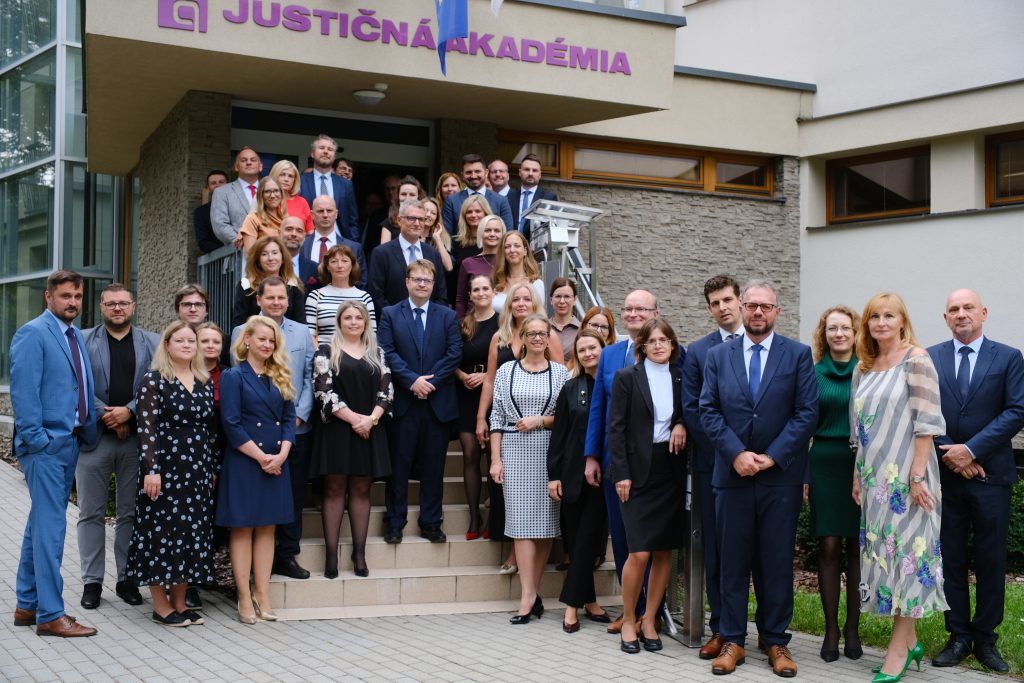 Group photo of the participants of the 2026 Administrative Justice Days. Photo © Supreme Administrative Court of the Slovak Republic.
Approximately eighty participants at the event welcomed Monika Valašiková, President of the Supreme Administrative Court, as well as guests Martin Vernarský, a judge of the Constitutional Court of the Slovak Republic, and Ivo Pospíšil, a judge of the Supreme Administrative Court of the Czech Republic.
The theme of the third annual Administrative Justice Days was the tenth anniversary of the Administrative Court Code (SSP), the procedural code governing proceedings before administrative courts. Marián Trenčan, Vice President of the Supreme Administrative Court, elaborated further in his opening remarks: “Administrative justice is the place where citizens meet the state as equals—and that is something that deserves our full attention and due seriousness. We need to discuss making administrative court proceedings more efficient. The speed of proceedings and their reasonable duration are not merely management slogans; they are essential for judicial protection to be meaningful. If a decision comes too late, it has the same value for the party as no decision at all. This event is not merely a review of the past. It creates a space for us—administrative judges who work with key regulations on a daily basis—to evaluate our experiences to date and identify areas that need clarification so that administrative court proceedings can be faster and simpler.“
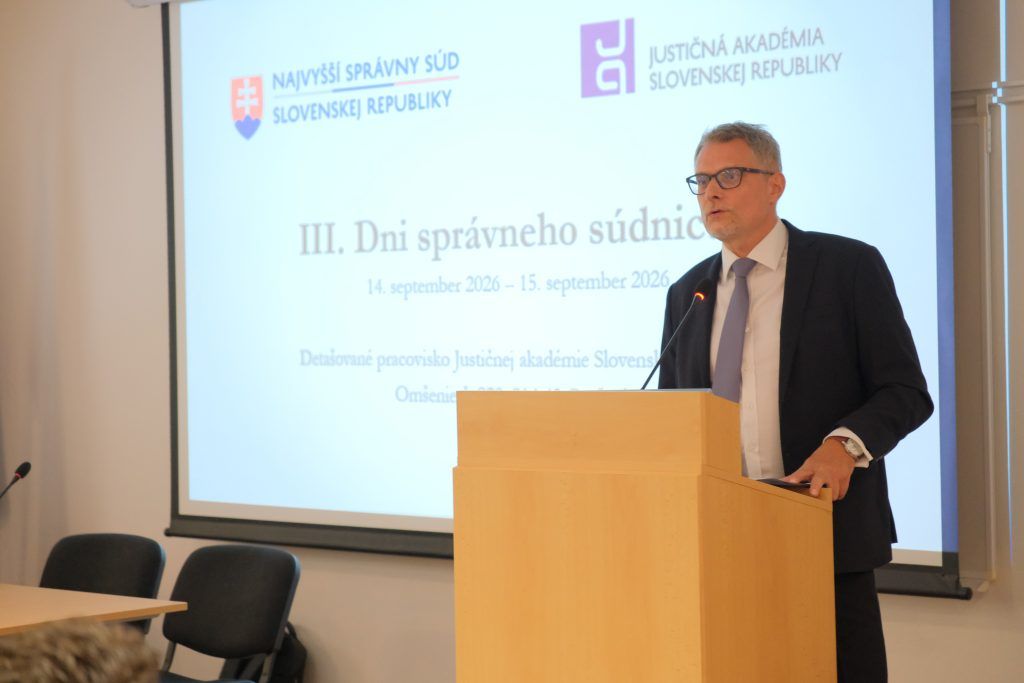
Speech by Marián Trenčan, Vice-President of the Supreme Administrative Court, during Administrative Judiciary Days 2026. Photo © Supreme Administrative Court of the Slovak Republic.
Monika Valašiková, President of the Supreme Administrative Court, greeted those present. She welcomed the opportunity to meet judges from lower administrative courts and offered them the chance to serve on a temporary assignment at the Supreme Administrative Court.
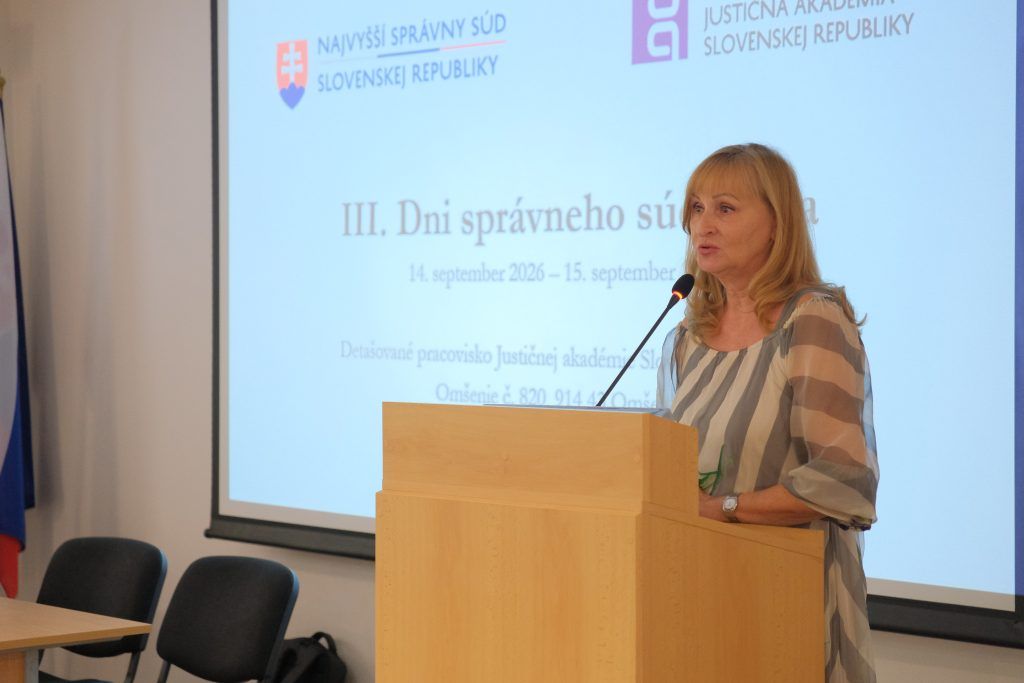
President of the Supreme Administrative Court Monika Valašiková at the opening of Administrative Justice Days 2026. Photo © Supreme Administrative Court of the Slovak Republic.
The first panel session of the 2026 Administrative Justice Days was titled “10 Years of the Administrative Court Code in Practice: Opportunities to Streamline and Accelerate Administrative Court Proceedings.” In his opening remarks, Martin Vernarský, a judge of the Constitutional Court, explained the difference between the speed and efficiency of proceedings and emphasized that swift proceedings are not always efficient. He addressed the issue of delays in the administrative judiciary and also presented statistical data on the number of successful constitutional complaints regarding delays in administrative court proceedings. Ivo Pospíšil, a judge of the Czech Supreme Administrative Court, shared exceptionally inspiring insights into the legislative reforms of administrative court proceedings in the Czech Republic that the Czech administrative judiciary has undergone in recent years.
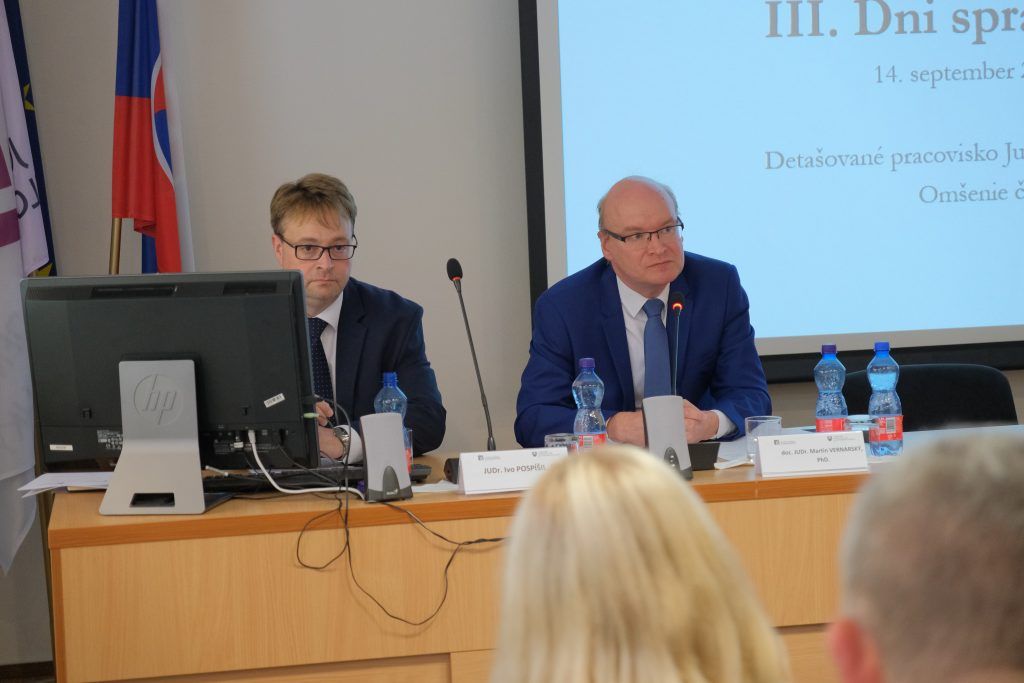
Constitutional Court Judge Martin Vernarský and Czech Supreme Administrative Court Judge Ivo Pospíšil during the 2026 Administrative Judiciary Days. Photo © Supreme Administrative Court of the Slovak Republic.
Petra Príbelská, a judge of the Supreme Administrative Court, answered the most frequent and pressing questions posed by administrative court judges from Bratislava, Košice, and Banská Bystrica—issues they encounter in their decision-making. The session concluded with a presentation by Marián Fečík, a judge at the local court, who reviewed several recent specific decisions by the Grand Panel and, using these as examples, focused primarily on clarifying certain procedural rules intended to enhance the efficiency of administrative court proceedings.
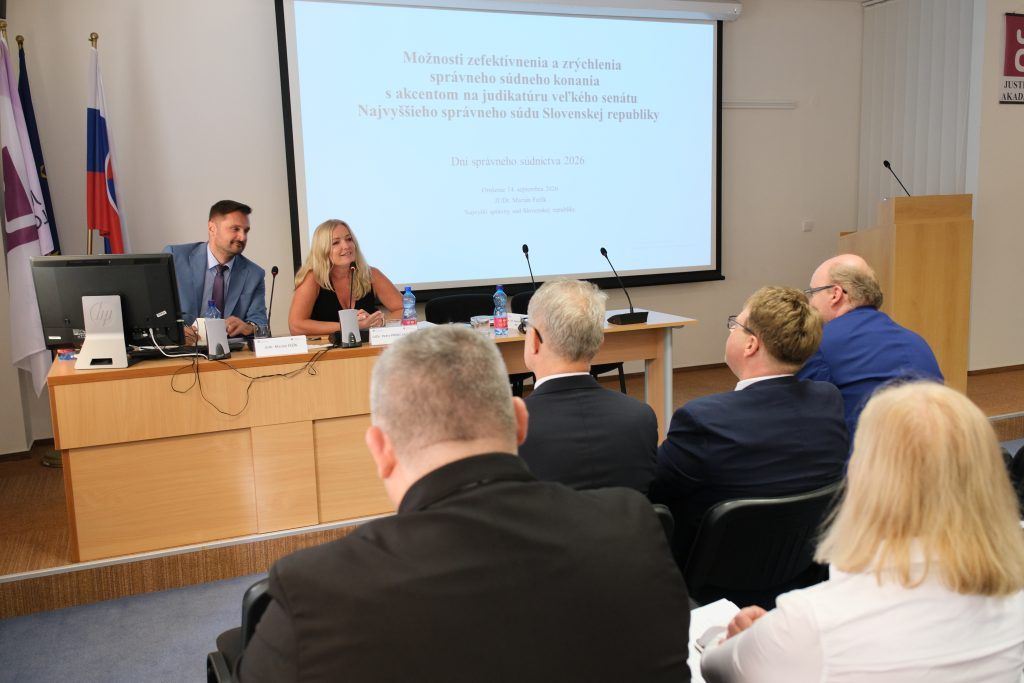
Supreme Administrative Court judges Petra Príbelská and Marián Fečík are speaking at the 2026 Administrative Judiciary Days. Photo © Supreme Administrative Court of the Slovak Republic.
The main objective of the Administrative Justice Days was a sincere effort by the judges of the Supreme Administrative Court and the administrative courts in Bratislava, Banská Bystrica, and Košice to streamline the judicial process for the benefit of the parties to the proceedings and to exchange views on contentious issues. During an afternoon panel discussion moderated by Juraj Vačok, a judge at the local court, representatives of lower administrative courts also addressed these issues, gradually raising specific topics related to administrative court proceedings. They shared their experiences on various topics and heard the opinions of judges from the Supreme Administrative Court on these matters. Monika Hrašnová, a judge at the Administrative Court in Bratislava, addressed the issue of civil courts referring cases to administrative courts due to a lack of their jurisdiction. Jana Raganová, a judge at the Administrative Court in Košice, raised the issue of procedural succession of parties in administrative court proceedings in cases involving the assumption of rights and obligations that are the subject of the proceedings. Silvia Zdráhalová Rúfusová, a judge at the Administrative Court in Banská Bystrica, addressed the time-related aspects of deciding on the award of litigation costs. The session concluded with Peter Molčan, a judge at the Administrative Court in Banská Bystrica, reflecting on the appropriateness of limiting the scope of parties’ submissions, which are becoming increasingly time-consuming to review—particularly due to the use of artificial intelligence in their creation.
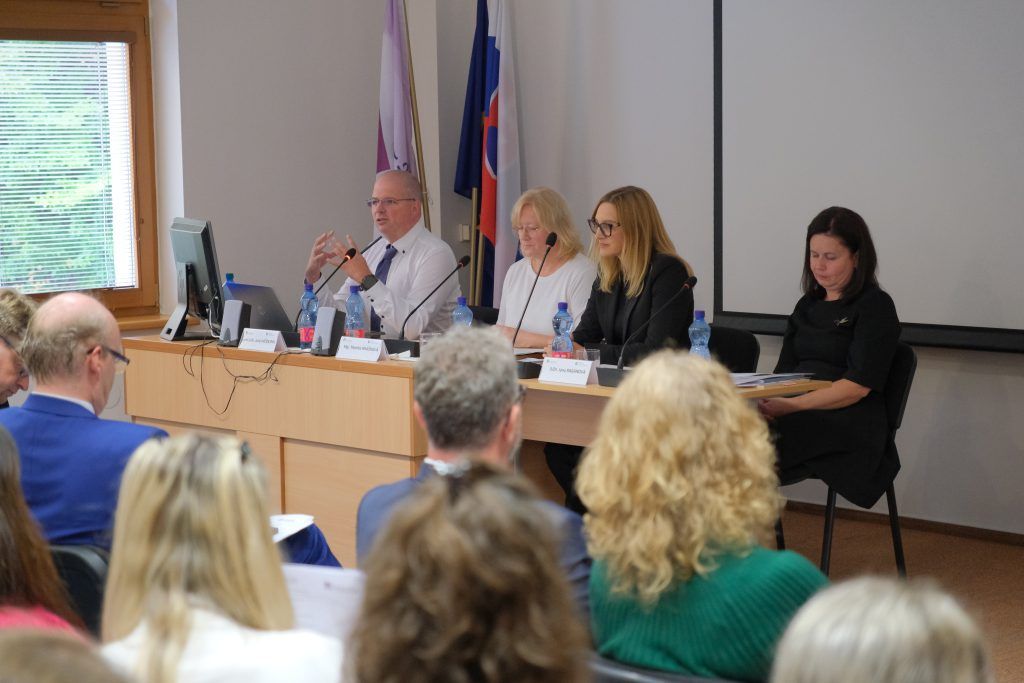
Speakers during the panel discussion: Judges Juraj Vačok, Monika Hrašnová, Jana Raganová, and Silvia Zdráhalová Rúfusová. Photo © Supreme Administrative Court of the Slovak Republic.
On the second day, the “Administrative Justice Days 2026” event continued with expert lectures on the topic of “Taxes,” presented by Juraj Vališ, a judge of the Supreme Administrative Court, and Jozef Sába, a judge of the Administrative Court in Košice. The second panel was devoted to “Social Affairs,” with presentations by Michal Novotný and Martin Tiso, judges of the Supreme Administrative Court. They also addressed the subsequent topic, “Civil Service Employment Relationships.” The final part of the event featured lectures on the topic of “Migration and International Protection,” presented by local court judges Elena Berthotyová and Michal Matulník.
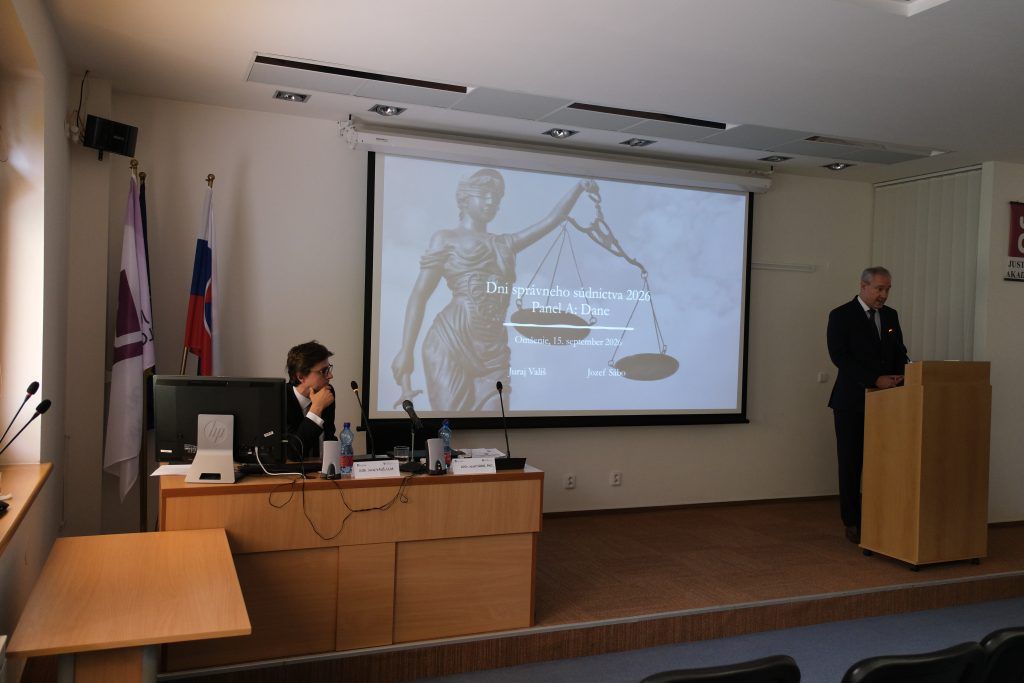
A lecture on taxes delivered by judges Juraj Vališ and Jozef Sába. Photo © Supreme Administrative Court of the Slovak Republic.
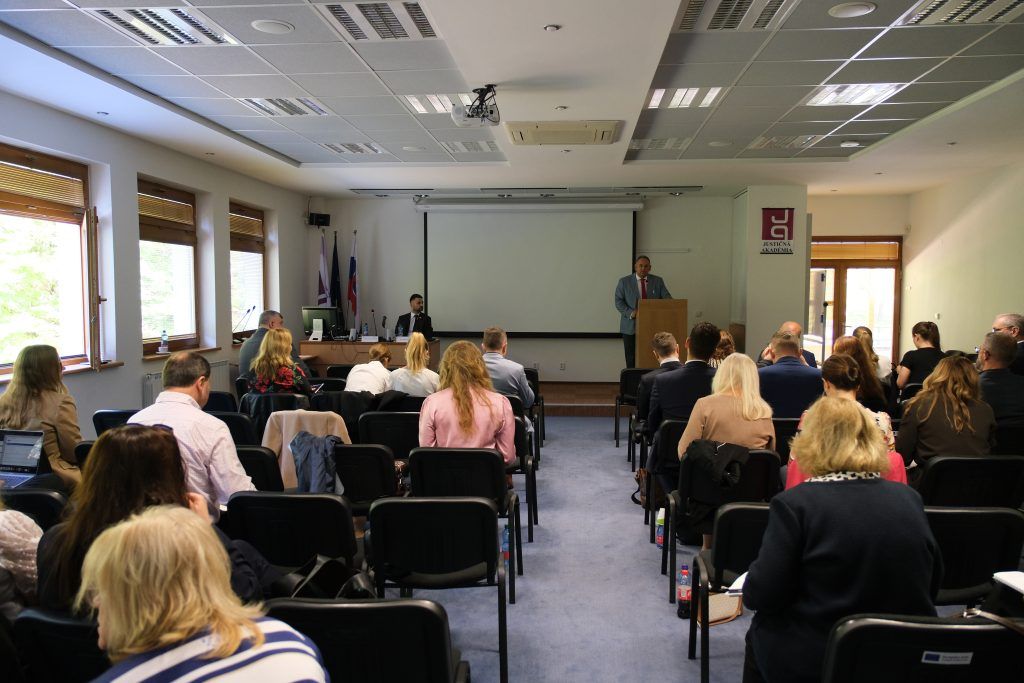
Lecture on taxes delivered by judges Michal Novotný and Martin Tiso. Photo © Supreme Administrative Court of the Slovak Republic.
This year’s Administrative Justice Days once again featured not only expert discussions but also informal conversations and reflections on topics in administrative law and administrative justice. These topics closely mirror the practical needs of the courts, reflecting the demands of those who interpret and ultimately apply the law.