
The First Year of the Student Conference held at the Supreme Administrative Court of the Slovak Republic
Ten students participated in a student conference titled “The Applicability of Artificial Intelligence in the Judicial System,” which was held at the Supreme Administrative Court on May 6, 2026. The event was the culmination of a pilot competition for the best academic article on the topic, which the Supreme Administrative Court announced in February (Law vs. Technology: The Supreme Administrative Court of the Slovak Republic announces a competition for students – Najvyšší správny súd Slovenskej republiky).
Students at Slovak universities had the opportunity to write and submit an academic article, which was then evaluated by a five-member committee consisting of the president and two other judges of this court, the head of the Chancellery of the Supreme Administrative Court, and an employee of the Information Technology Department. The committee evaluated the articles according to predetermined criteria, which included, above all, the extent of the author’s original thinking, proper citation of sources, the quality of the argumentation, factual accuracy, and the interest of the specific topic chosen.
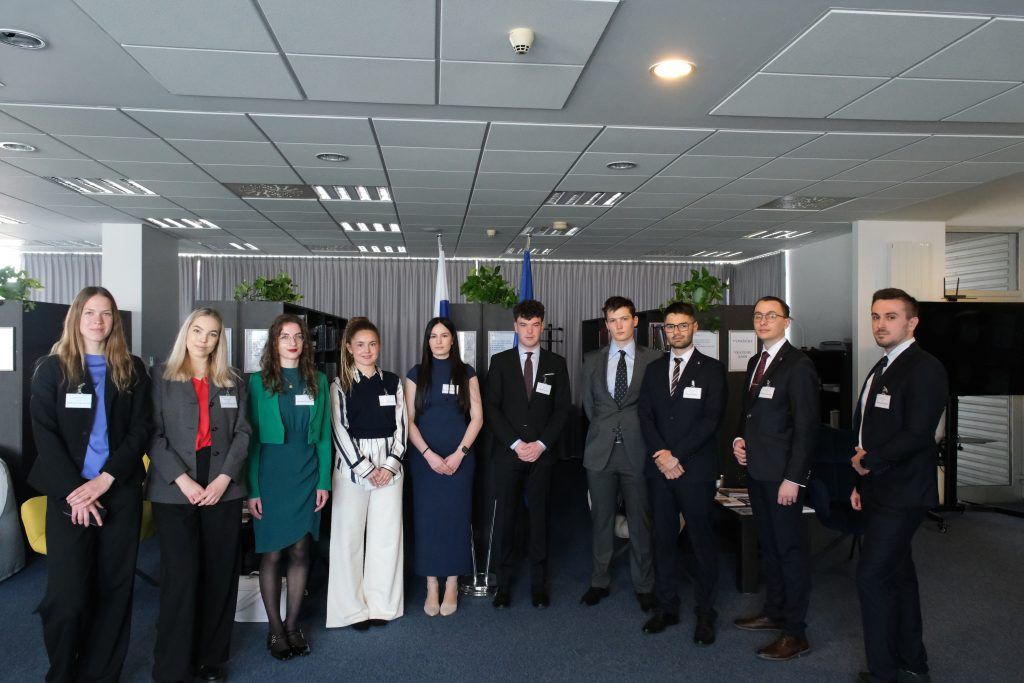
Participants in the student conference during a tour of the Supreme Administrative Court building. Photo © the Supreme Administrative Court of the Slovak Republic
The authors of the papers submitted to this court were students from law schools as well as technical universities throughout Slovakia, with a total of 23 students participating in the competition. Ten students were invited to give an oral presentation, which consisted of defending their own work and answering questions from the committee. In the end, the top 5 students were awarded prizes: Dárius Krestian from the Pavol Jozef Šafárik University in Košice (1st place), Bianka Šimková from the Technical University of Košice (1st place), Samuel Ladislav Ballek from theComenius University in Bratislava (3rd place), Tatiana Tomášová from the Comenius University in Bratislava (4th place) a Rachel Škorupová from the Trnava University in Trnava (5th place). Ultimately, the focus on the practical aspects of the issues discussed, the specificity of the conclusions, and the contestants’ original thinking also played a role in deciding on the best papers.
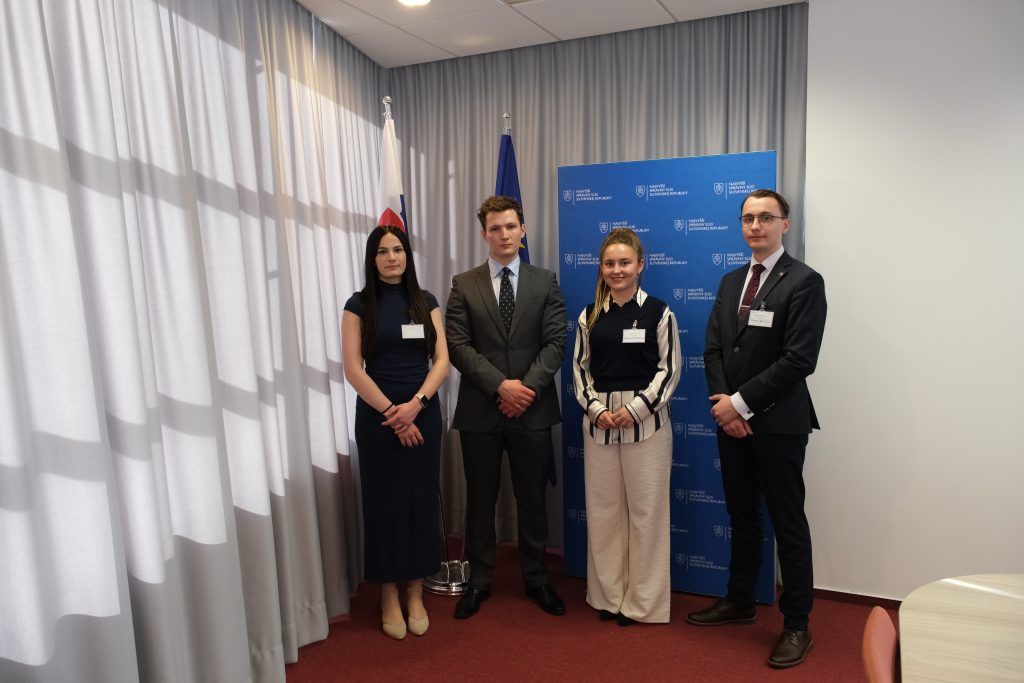
Authors of the best academic articles who placed in the top spots. Photo © the Supreme Administrative Court of the Slovak Republic
In their papers, the students reflected on many aspects of the use of artificial intelligence (AI) in the judicial system. Several noted that AI is already being used today as an accessible tool in the legal field. They generally concluded that judges, their assistants, and judicial analysts should use AI—at most—as an aid to improve efficiency: as a tool to support case law searches, research, and analysis, under strict conditions, with mandatory auditing and transparency, but never in decision-making. They also noted that, in terms of value, AI cannot replace judges’ own thinking and deliberations. The students identified several limitations of AI stemming from its algorithms, which often manifest as “hallucinations,” and in this context, they also cited specific cases of controversial AI use that had repercussions in court proceedings. The university students reflected on the constitutional limits of AI use and its potential impact on the principle of legal certainty; guided by questions from committee members, they also sought other perspectives and answers regarding the relationship between technology and the principles of legality and justice. Several participants suggested that the future of AI in the justice system lies in internally operated AI systems, primarily for reasons of data security and the protection of parties to proceedings.
“Let’s not ask what AI can speed up, but what it must never replace.” “AI has no emotions; a judge’s conscience and moral judgment—which guide their decision-making—are irreplaceable, which is why technology cannot replace judges.” “Students and young lawyers should, in their own best interest, work with legally binding texts, not with AI.” “Good public administration also requires appropriate legislation, and such legislation will be necessary in connection with the use of AI.” “A party to the proceedings has the right to a lawful human judge, and that is why the public views the judge as an authority.” These are some of the ideas that were expressed during the student conference.
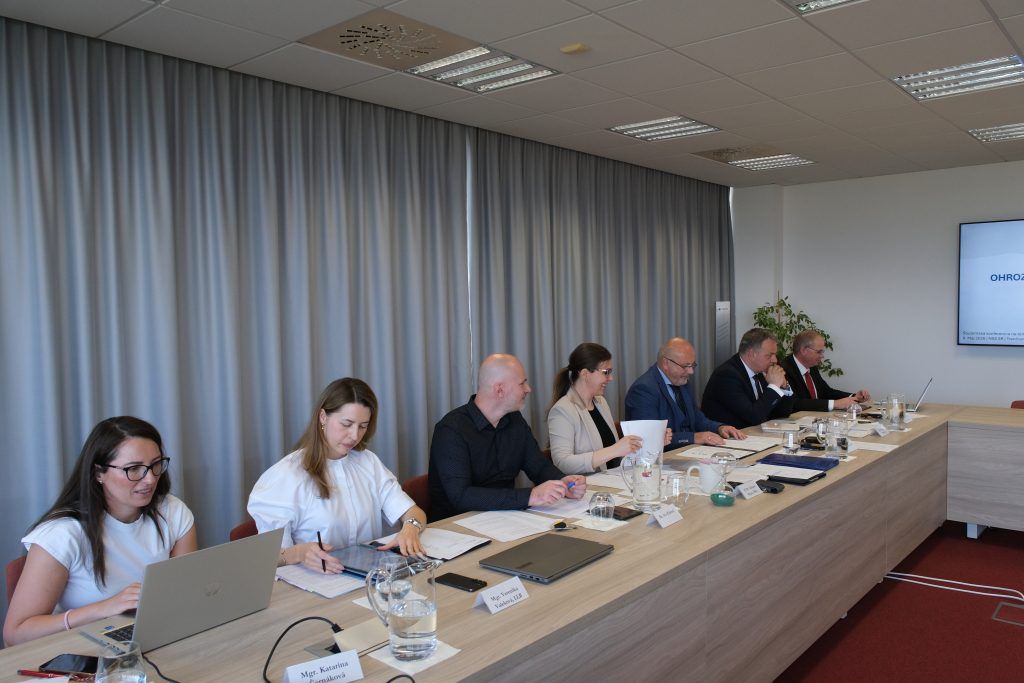
The expert committee that reviewed the academic articles. Photo © the Supreme Administrative Court of the Slovak Republic
All winning articles will be published in our professional journal, the Journal of Administrative Justice, and the two students who tied for first place will be guests on the Supreme Administrative Court’s Administrative Podcast. The authors of the top three winning articles will also be mentored by a judge from this court or a staff member of the Chancellery of the Supreme Administrative Court, and will be able to participate in one of the upcoming in-house training events (of their own choice).